
An in-store merchandising audit is a method used by brands and retailers to make sure their products look and perform well on store shelves. It helps answer simple but crucial questions. Is the product where it is supposed to be? Is it visible to customers? Are promotional displays correctly set up? These audits give a real-world check on whether store plans are being followed.
Stores create ideal setups using diagrams called planograms. These show how and where products should appear. But stores are busy places and things can change fast. Items get moved. Stock runs out. Competitors may grab extra space. A merchandising audit checks if the plan still matches what is actually happening in the store.
To manage this at scale, brands use retail placement data analytics to track how well their strategies work across locations. These systems analyze photos, inventory logs, and checklists to spot gaps. When audits are done right, they help catch problems early and drive better results at the shelf.
Common Industry Terms
- A Planogram is a detailed diagram that shows the ideal product layout for a shelf or display.
- Facing is the term used for the number of units of a product that are visible from the front of the shelf.
- OOS stands for out-of-stock and means a particular product is missing from the shelf even though it should be available.
- An Audit Trail is the history of all checks and fixes done at a store.
- Retail Execution is the act of putting marketing and merchandising plans into place at the store level.
- SKU stands for stock keeping unit, and it is a unique identifier used to track a specific product.
- POS Data is sales data that has been collected from the register or checkout system.
Breaking Down the In-store Merchandising Audit
Let’s go through the audit process step-by-step. It starts with the planogram. This is a visual map that defines the layout for each shelf. It shows how many facings each product gets, where signage goes, and what products should sit together.
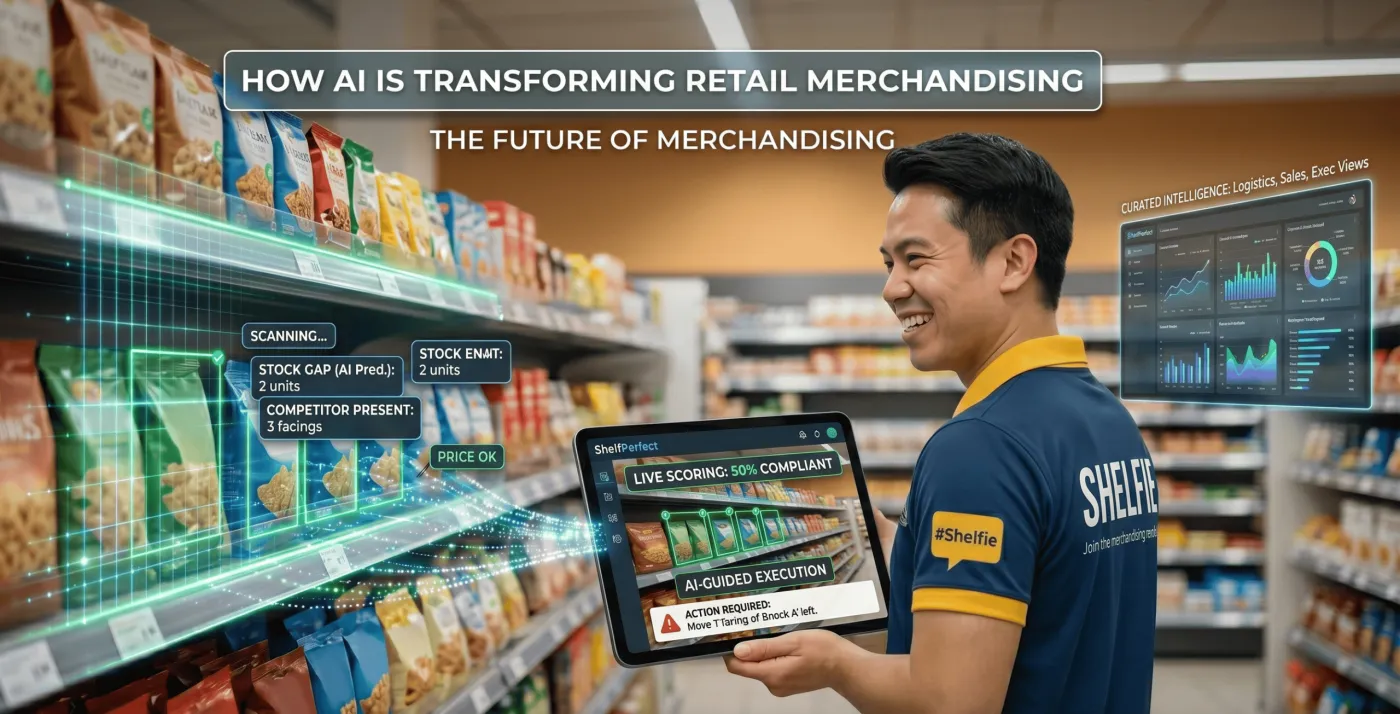
Next, a merchandiser or field rep visits the store with tools like mobile apps or tablets. They scan the shelves and take pictures. They count stock, check signs, and confirm whether the products match the planogram. Are the labels facing forward? Is the shelf clean? Is there leftover holiday signage still up? These details matter.
Some audits include competitor tracking too. Reps may record how nearby products from other brands are positioned. This can give insight into whether your product is being overshadowed or squeezed off the shelf.
Once the data is collected, it’s uploaded to a central system. This is where analytics kicks in. Software compares the in-store reality to the original plan. It flags issues like out-of-stock products, missing signs, or incorrect facings. Teams can then act fast to correct problems.
Modern audits don’t just rely on humans. AI tools now analyze shelf images in real time. These systems can detect product types, count facings, and even measure how much of the shelf each brand controls. This kind of automation makes audits faster and more accurate.
The Power of Retail Placement Data Analytics
Analytics is where everything gets stitched together. You’re not just collecting pictures and checklists. You’re creating a stream of structured data. This can reveal which stores are performing well, where compliance is falling behind, and what strategies need to change.
A platform like ShelfPerfect uses retail placement data analytics to generate visual dashboards. These help teams see trends across thousands of stores. For example, you might learn that stores in one region always run out of a specific SKU on weekends. Or that your endcap displays are only being set up 60 percent of the time in discount chains.
AI adds even more value here. Machine learning models can predict future problems based on current patterns. If your product is getting displaced by a competitor in multiple stores, the system can recommend action before it affects sales. Predictive tools also help fine-tune promotions by learning what works best in different store formats.
ShelfPerfect doesn’t stop at reporting. It links the data to real actions. When a gap is found, a merchandiser can be dispatched to fix it. Or if compliance is high, teams can reward stores that follow the rules. This closes the loop between data and execution.
Insights from In-store Merchandising Audit in Action
The best audits don’t just highlight mistakes. They give brands the power to act fast and smart. With tools like ShelfPerfect, brands can see which stores are following display rules and which need help. This means better execution and better returns on retail investment.
For example, say a national snack brand finds that 30 percent of its stores are missing promotional signs for a new product. That means lost visibility and lost sales. ShelfPerfect’s dashboard shows exactly where the problem is. A local merchandiser gets alerted and fixes the signage. Sales improve, and the next audit shows better compliance.
Now imagine combining this data with AI. The system learns which stores tend to have low execution. It flags them before the next promotion. You can adjust your plan in real time. That’s how modern merchandising gets proactive instead of reactive.
The platform also tracks competitor presence. If a rival brand suddenly gets more facings in a major retailer, you’ll know right away. This lets your team respond fast, whether it’s by boosting promotions or renegotiating space.
That’s the power of an in-store merchandising audit. It’s not just about checks. It’s about getting a complete view of how your brand lives on the shelf.
If you want your products to win at retail, your shelf strategy needs more than good design. It needs reliable eyes on the ground and smart systems in the cloud. ShelfPerfect provides retail insights by combining in-store merchandisers with AI data analytics to become your eyes, hands and ears on the store level. Learn How it Works
See your own shelves in the platform
We will show you all the features in a simple 10-minute demo.