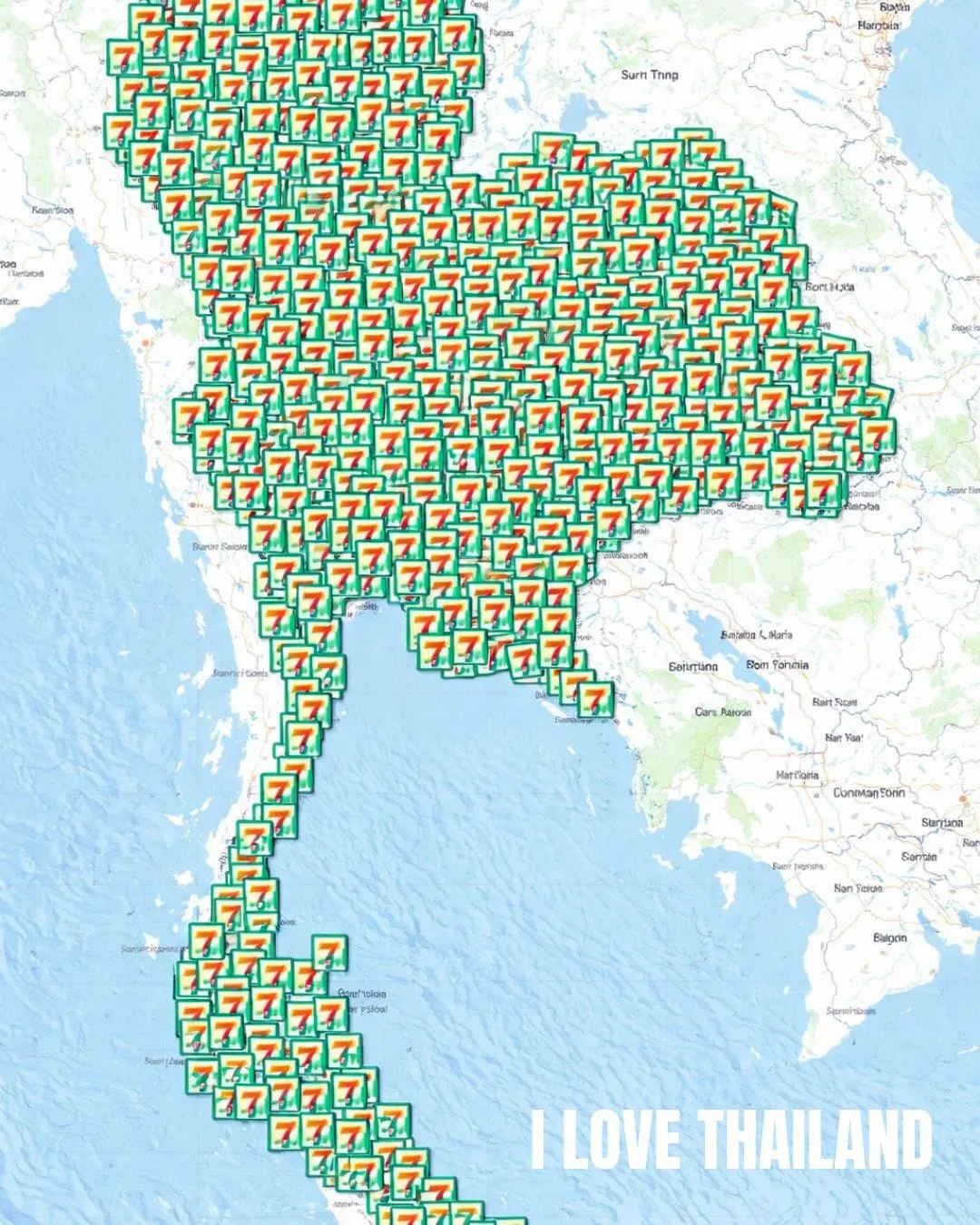
A post recently went viral showing a map of Thailand almost completely covered in 7-Eleven logos. The caption read: “It would take 40 years to visit every 7-Eleven in Thailand.” At first glance, it sounds exaggerated, but the math is surprisingly accurate. Thailand has more than 15,000 7-Eleven stores, making it one of the largest convenience store networks in the world. If a single person visited just one store per day, it would take over four decades to reach them all.
This statistic is more than just a fun fact about Thailand’s retail landscape. It highlights a much bigger reality about modern retail: the sheer scale of store networks has grown beyond what traditional merchandising models were designed to handle. Retail chains today operate thousands of locations across a country, each carrying hundreds or even thousands of products. Promotions change frequently, displays move, staff rearrange shelves, and products sell out. For brands, simply securing distribution is no longer enough. The real challenge begins once the product reaches the store.
Brands constantly ask the same questions. Is the product actually on the shelf? Is it placed according to the planogram? Is it out of stock? Is it positioned correctly or hidden behind competitors? Across thousands of stores, small execution issues compound quickly and can translate into significant lost sales. Historically, the way companies have tried to manage this has been through traditional merchandising teams. A merchandiser might cover 100 to 200 stores, visiting them according to a fixed route. In many cases, each store might only be visited once every few weeks. This model worked decades ago when retail networks were smaller, but when a single chain can have more than 15,000 locations, the system simply does not scale.
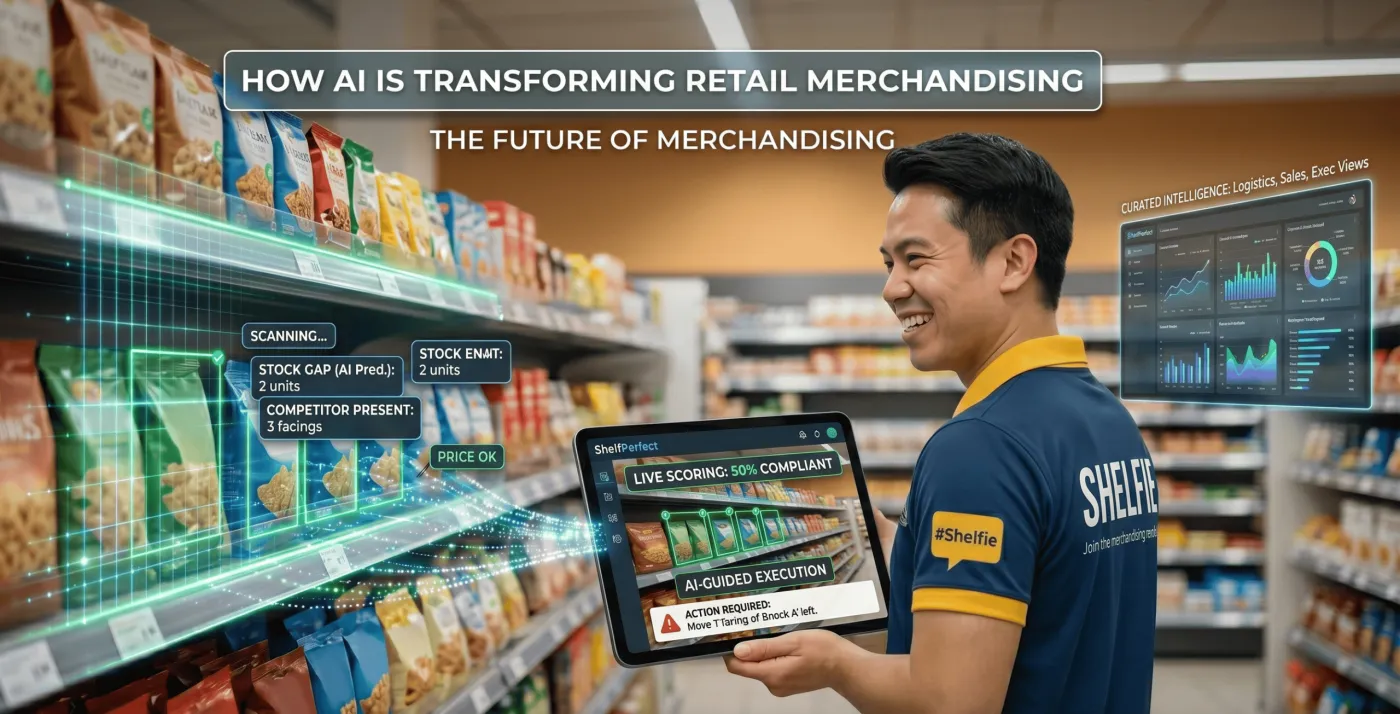
The viral “40-year” statistic illustrates this perfectly. It assumes one person checking stores sequentially, one after another. But what if store visits happened in parallel instead? This is the core idea behind ShelfPerfect. Instead of relying on a small centralized field team, ShelfPerfect deploys a distributed network of trained merchandisers located near the stores they visit. These merchandisers, known as Shelfies, operate locally and can complete store visits across many locations at the same time. By distributing the workforce geographically and enabling visits to happen in parallel, the speed at which brands can understand what is happening in retail changes dramatically.
If we apply this model to Thailand’s 15,000+ 7-Eleven stores, the difference becomes clear. Imagine a network of 500 trained merchandisers active across the country. If each person visits five stores per day, that results in 2,500 store visits daily. At that pace, the entire network could theoretically be visited in roughly six days. Expand the network to 1,000 merchandisers and the same nationwide retail snapshot could be completed in less than three days. What would take one person more than forty years could be achieved within a single week.
Speed matters because retail shelves change constantly. Products sell out, competitors launch promotions, displays move, and store staff rearrange products. Data that is two weeks old is often already outdated. Fast, distributed retail execution transforms merchandising from slow reporting into real-time retail intelligence. Instead of guessing what is happening across thousands of stores, brands can quickly identify where products are missing, where compliance is low, and where opportunities to increase sales exist.
Thailand’s 7-Eleven network is an extreme but powerful example of how large retail networks have become. Across Asia, the scale is even greater, with tens of thousands of convenience stores in countries like Japan, South Korea, and Indonesia. As retail continues to expand, the ability to monitor and optimize shelf execution at scale becomes increasingly critical. The real question is no longer whether it is possible to visit every store. The question is how quickly brands can understand what is happening across the entire network. When execution improves across thousands of stores, even small improvements can generate enormous increases in sales. That is exactly the problem ShelfPerfect was built to solve.
See your own shelves in the platform
We will show you all the features in a simple 10-minute demo.